
How do I reduce my IBS symptoms?
Irritable Bowel Syndrome, or IBS is a common gut disorder. Gut symptoms include abdominal bloating, gas and pain. You can find out more about Irritable Bowel Syndrome in my previous blog post: What is IBS?

I find that for many people, trying to understand which factors are contributing to their IBS can be very confusing! Many have even worked through some dietary strategies by themselves, or worked with another practitioner, but if the first one or 2 steps that they try aren’t enough to make them feel better they either give up or throw random strategies at the problem, and just end up getting more confused.
My 3 step approach to address IBS
For me, the simplest way to approach the problem is with strategy.
I follow a 3 step approach to helping you manage your gut symptoms
1. Reduce your gut symptoms
This is an obvious goal to want to reduce your symptoms! And yet it is not always obvious what you need to do to achieve it. I take a look at your symptom pattern, your history and what strategies you have already tried to work out the best next steps to help you reduce your symptoms.
This could include
Changing your diet – I will choose the best dietary approach to suit your needs, based on your symptoms patterns, eg Low FODMAP, Gluten or Dairy Free, Low Histamine, Low Food Chemical - there is no one diet that works for everyone!
Changing some things in your lifestyle or environment that may be impacting your symptoms
And sometimes we need to Dive Deeper to get some more answers with some further testing to help pinpoint what is driving your symptoms
Everything is much easier when you feel better and are not fighting (or fearing) symptoms all the time!
2. Understand your triggers
It is great that you are feeling better after the first step of reducing your symptoms, but if you have taken some foods out of your diet to feel better, your diet may be feeling pretty restricted right now!
I’ll take you through a step-wise process so you can learn what triggers your symptoms. Knowledge is power!
Armed with that information, you are in the driver’s seat, you know exactly what foods to avoid to stay symptom free, and you know what to expect if you do eat foods that trigger your symptoms, so you can choose the time and place you are willing to experience that.
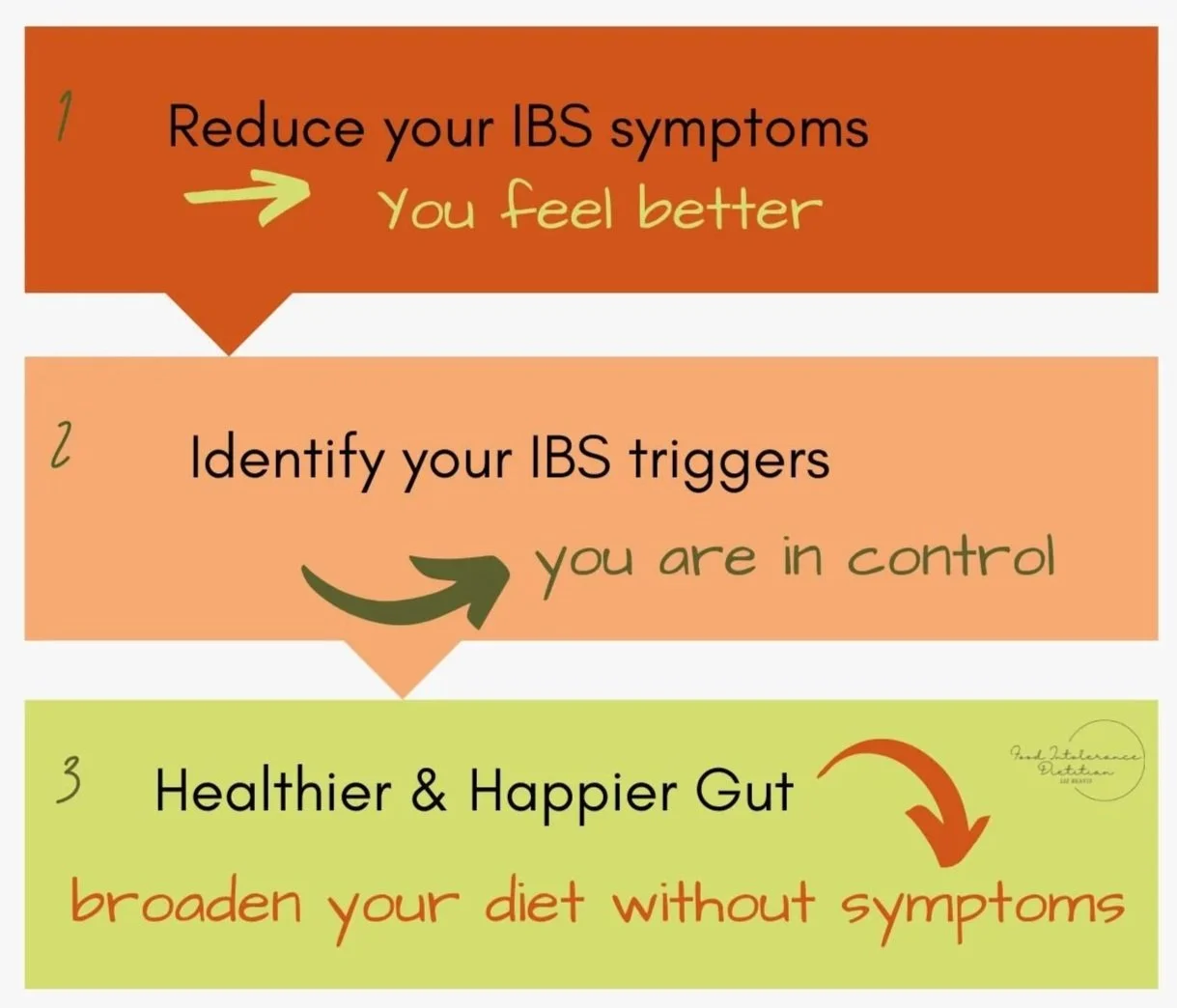
3. Broaden your diet without symptoms
I find that some people get stuck after step 1, but even more people get stuck after Step 2. To be honest, that’s not really surprising as I find there is not really much guidance beyond that, so most people are stuck continuing to avoid foods that trigger their symptoms, which can sometimes be a very restricted diet!
The problem is that research now shows us that following a restricted diet is actually not only hard to follow long term, it is also not good for your gut health (oh, the irony!), your gut bacteria actually LOVE diversity, and especially love many of the FODMAP foods that you are avoiding because they trigger your symptoms!
I take you through a step-by-step process to help your gut back to a happier and healthier place so that you are able to include many more foods once more, but this time WITHOUT symptoms.
At which step did you get stuck?
If you would like to reduce your symptoms and get back to enjoying food again, you can book a free 15 minute Discovery Session to find out how I can help you.
