Do I have Histamine Intolerance?
Over the last few years there has been an increased awareness of how Histamine Intolerance may be impacting your symptoms.
Histamine Intolerance can trigger a wide range of symptoms including
Migraines
Headaches
Hives
Itchy skin
Rashes
Flushing
Itchy eyes
Tachycardia (racing heart, or heart palpitations)
IBS
Reflux
Nasal congestion
Sneezing
Insomnia
What is Histamine?
Histamine is an important messenger molecule in your body. Most people are familiar with Histamines in hayfever - you have probably taken anti-histamines at some stage to settle a sneezing fit in Spring or a rash from grass irritation. As well as the ‘annoying’ symptoms you may be familiar with, Histamine also plays an important role in your immune system, gut function and as a neurotransmitter (brain messenger).
Your Histamine ‘bucket’
Histamine intolerance is not like an allergy, where your immune system reacts to a small amount of a particular protein (eg peanuts, bee stings etc), usually with a big response.
Histamine intolerance occurs when you have more Histamine in your system than your body can breakdown. This is often described using an analogy of your Histamine bucket. You fill your bucket with Histamine (eg Histamines in food), and you empty your bucket by breaking down (or metabolising) Histamines. When you have more Histamines than your body can metabolise you Histamine bucket overflows, triggering your Histamine Intolerance Symptoms.
Some people seem to have a huge Histamine bucket, or more likely they can efficiently empty their bucket, so they never experience Histamine Intolerance symptoms. Other people seem to have a smaller bucket, or more likely they empty their bucket very slowly, so that their Histamine bucket frequently overflows when they eat high Histamine foods. Some people can’t identify particular foods that trigger their symptoms because their bucket is always overflowing.
But one factor that is often overlooked is that foods are not the only source of histamine in your body.
I like to consider 3 main sources of Histamine in your body:
Firstly, your diet contains many foods that are naturally rich in Histamines and other similar amine groups (one of the things that makes our food so tasty!). This is your Dietary Histamine/Amine load.
Secondly, some of your gut bacteria produces Histamine and other Amines. Some people have particularly high levels of these bacteria. I’m going to call that Microbial Histamine.
Thirdly, your Mast Cells release Histamine when they are triggered - lets call this your Mast Cell Histamine. This may be a small amount in a small area (eg a red itchy circle around a mosquito bite), a larger amount eg that triggers hayfever symptoms, or a really large amount that can trigger more extreme symptoms like rapid heart-rate, fainting or anaphylaxis.
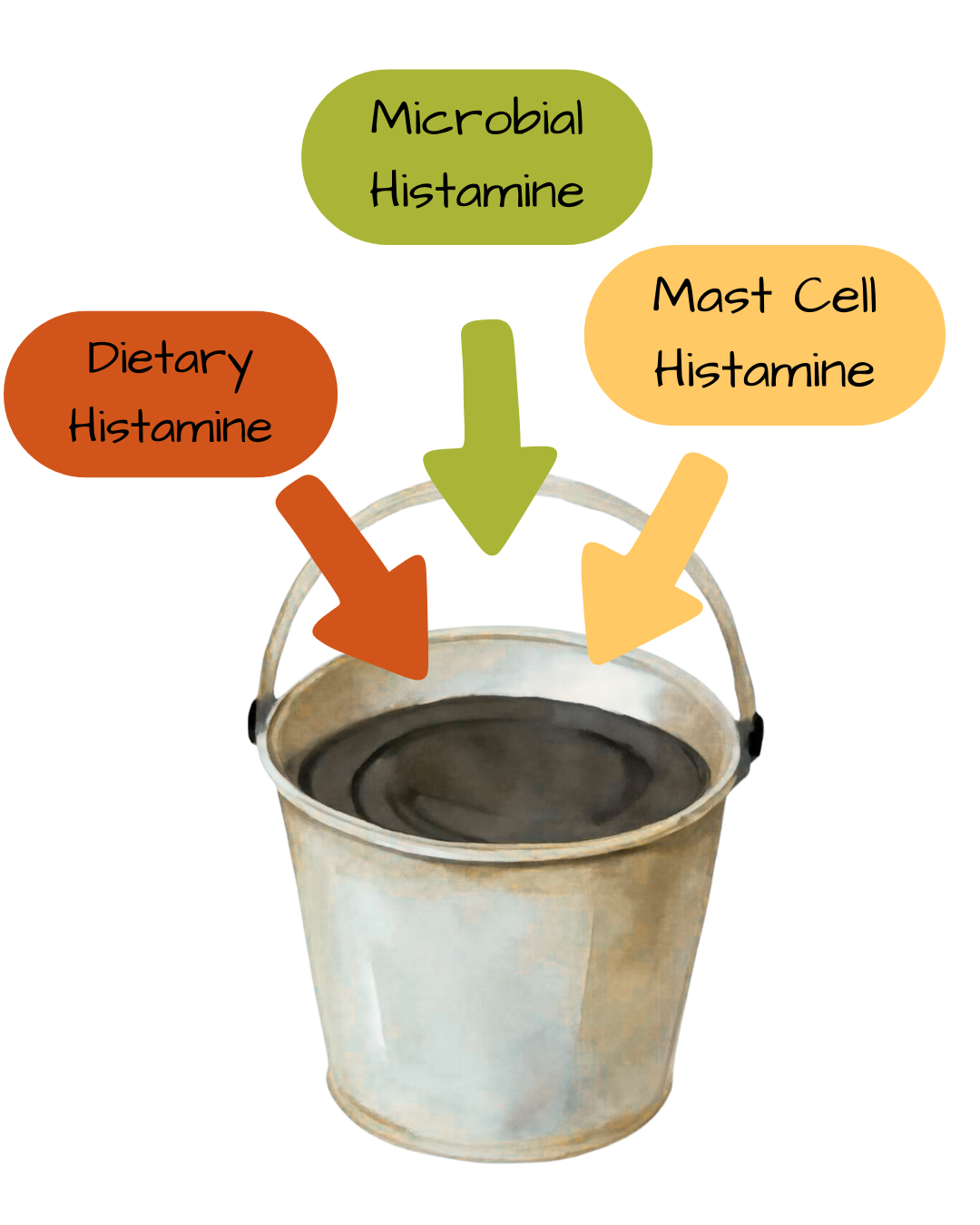
All of the Histamine (from all 3 sources) contributes to your Histamine load (or your Histamine Bucket).
When you reduce your Dietary Histamine/Amine load on a Low Histamine Diet you are reducing the amount in your Histamine bucket, which may help to reduce symptoms caused by high Histamine levels, regardless of which of the 3 sources of Histamine were filling your bucket. This is an easy first step, and for some people can improve their symptoms significantly whilst you work with your dietitian to understand the underlying reasons.
If you have Histamine/Amine overload issues (because your Histamine/Amine bucket is small) you need to work to increase your bucket so you can include more Amine foods without triggering symptoms. You can also reduce your Microbial Histamine so your bucket doesn’t fill up so easily.
What is a Low Histamine Diet?
The goal of a Low Histamine diet is to reduce your intake of histamine from foods, to see if this will help reduce your symptoms.
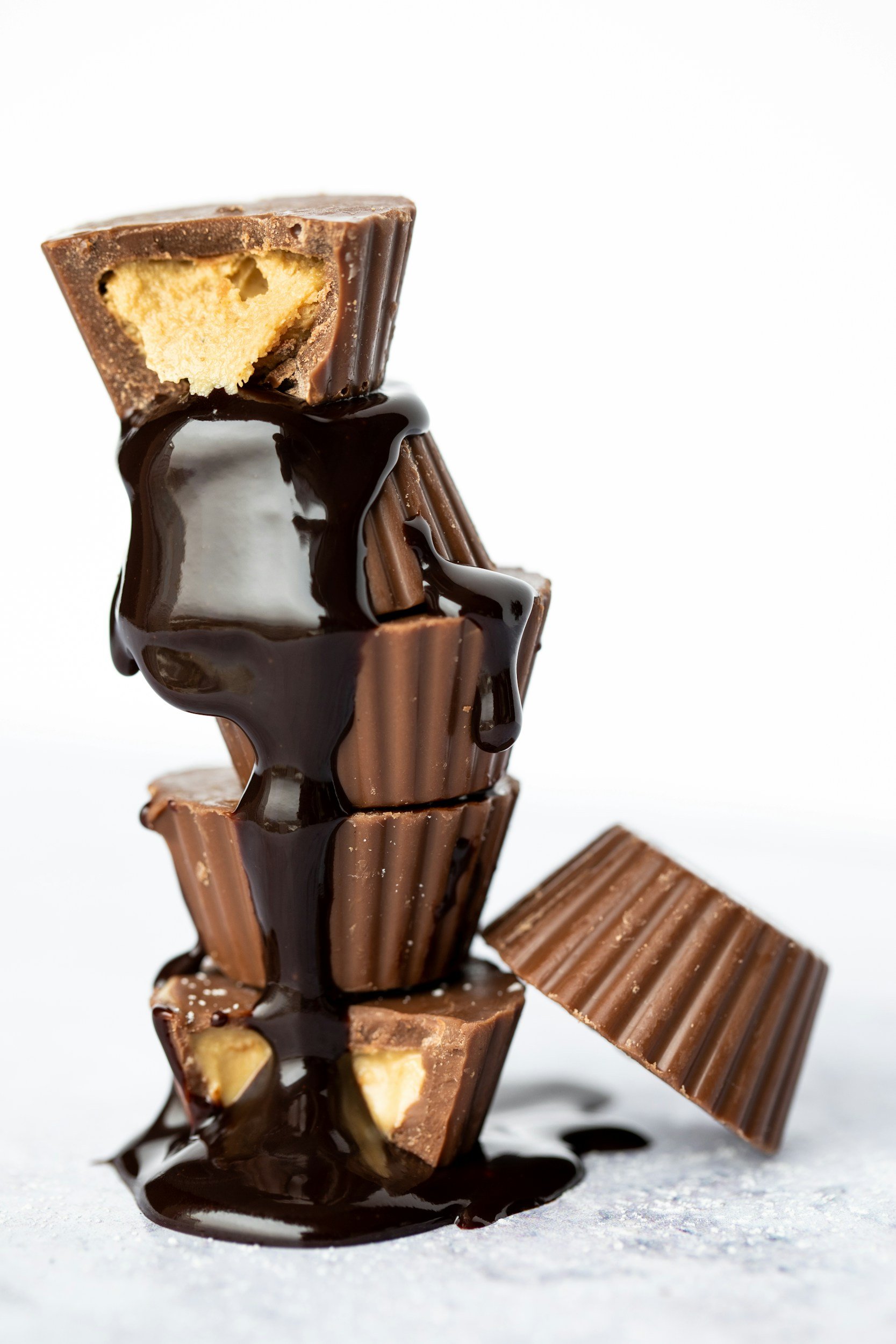
Some people find that they can reduce their symptoms with just a few tweaks to their current diet, removing some well-known High Histamine foods including
Chocolate
Rich tomato sauces
Red wine
Aged cheeses
Fermented foods including soy sauce, kombucha
However one of the most confusing steps for many people is that the internet contains a lot of conflicting information about what is considered Low Histamine. Additionally, I find that some people find that they don’t improve enough on a Low Histamine diet, which is most commonly because they have issues with other Amines (eg Tyramine) or other naturally occurring Food Chemicals, eg Salicylates, Glutamates or additives (preservatives, artificial colours, MSG etc), or perhaps other types of food intolerances eg FODMAPs, SIBO etc
Why do I have Histamine Intolerance?
There are a number of possible contributing factors as to why you have Histamine Intolerance.
Hormones – you may find that changes in your hormone levels impact your histamine tolerance. A lot of women notice worse symptoms during certain stages of their menstrual cycle, and often Histamine issues are worse during PeriMenopause
Mast Cell Histamine – During hay fever season you may have a larger amount of Histamine running through your system, released by your Mast Cells in response to pollens etc
Microbial Histamine – you may have larger amounts of Histamine in your system, produced by your gut bacteria, depending on the microbiome balance in your gut
Enzymes – you may have fewer enzymes that help you to break down Amines. DAO (DiAmine Oxidase) is an important enzyme for breaking down your Histamine Enzymes. Most of your DAO is produced by your gut lining, and this may be compromised if you have gut damage or inadequate nutrients required to create the enzymes.
Genetic variation – you may have genetic variations that reduce the production or capacity of some enzymes. This can reduce function of another Histamine enzyme HMNT
What can I do if I suspect I have Histamine Intolerance?
Some people find that they can reduce their symptoms with just a few tweaks to their current diet, removing some well-known High Histamine foods (see What is a Low Histamine Diet? above)
However, if this is not enough to improve your symptoms I recommend getting support to identify your food triggers with a dietitian, and learn what other factors may be contributing to your symptoms – you can book in a free 15 minute Discovery Session with me if you want to get an idea of what that may look like for you.
However it is important to remember that Histamine Intolerance doesn’t have to be a lifelong dietary restriction! Reducing your symptoms is only the first step. To me it is also very important to work out what is underlying or driving your Histamine Intolerance so that you can address these issues, so that you are able to include more Histamine foods back into your diet without symptoms.