
Everyone is talking about the gut microbiome recently, but what is it and can you change it?
It wasn’t that long ago that gut bacteria were considered nasty bugs fermenting your waste in the garbage can. Like prawn shells rotting in the wheelie bin on a hot day, fermenting garbage has to be a bad thing, doesn’t it?

We couldn’t have been more wrong! Your gut microbiome has the potential to influence of your health. Some people consider your gut microbiome the largest organ in your body – there are indeed more bacterial cells living in your gut than you have cells in your body!!!
An unhelpful balance of gut bacteria is sometimes known as Dysbiosis.
So many diseases are associated with Gut dysbiosis, and research is adding to this list all the time!
Diseases Associated with Gut Dysbiosis include
Gut issues associated with dybiosis
Antibiotic-associated diarrhoea
Chemotherapy and Radiotherapy-associated diarrhoea
Clostridium difficile infection
Coeliac disease
Crohn’s disease
Diverticular disease
Irritable bowel syndrome
Non-alcoholic fatty liver disease
Small intestinal Bacterial Overgrowth (SIBO)
Ulcerative colitis
Other health conditions associated with dysbiosis include
Alzheimer’s disease
Anxiety
Asthma
Atopic eczema
Autism
Cancer, including Colon, Prostate
Chronic Fatigue Syndrome
Depression
Diabetes
Heart Disease
Histamine intolerance
Kidney disease
Metabolic syndrome
Multiple sclerosis
Obesity
Parkinson’s disease
Rheumatoid arthritis
Sleep dysfunction
This doesn’t necessarily mean that dysbiosis causes all of these conditions. In some cases gut bacteria balance may be one of the underlying factors contributing to the start of the disease process. In other cases gut bacteria may be related to how the disease progresses, or how the disease presents.
How do gut bacteria affect you?
Your gut bacteria ferment your food byproducts (the bits of your food leftover after you have digested and absorbed whatever nutrients you can), and in turn they create metabolic byproducts.
Some of those metabolic byproducts are beneficial, arguably essential for our health including
Synthesise nutrients including Vitamin K
Produce Short Chain Fatty Acids, such as Butyrate which has many important roles including a major fuel source for your gut cells, support gut barrier integrity, reduces inflammation, helps manage appetite and sleep
Convert Polyphenols so they can be absorbed through your gut and provide antioxidant benefits
Bind up Oxalates, preventing kidney stones
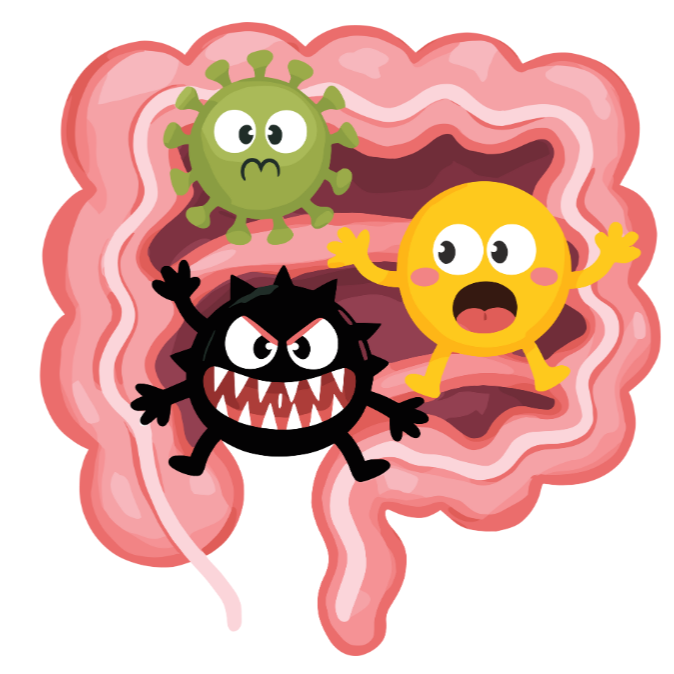
However, some byproducts from our gut bacteria can have negative impacts on our health. For example inflammatory byproducts can irritate your gut, contributing to gut symptoms, and some can influence inflammation throughout the rest of your body, and have been associated with arthritis, obesity, Diabetes and other inflammatory diseases.
What is important is the balance of your gut bacteria – ideally you want more of the types of bacteria that produce beneficial byproducts, and less of the types of bacteria that produce inflammatory byproducts.
If you want to learn more about what’s in your gut, have a read of my blog article Is Microbiome testing legit?
Can you change your gut microbiome?
Back in the 1980s in the early stages of understanding the benefits of gut bacteria we thought that taking a probiotic (a capsule containing 1 or 2 beneficial strains of bacteria eg Lactobacillus) would ‘seed’ the gut and change the balance of your gut bacteria. Then there was an uproar when research later showed that probiotics don’t actually stay in your gut longer than 1 week (or occasionally a few weeks).
Now that doesn’t mean that probiotics are a waste of money, they do play a role (more on that in another blog post coming soon) but not in the way we first thought.
What we know now is that what you FEED your gut bacteria is much more important – you can change the balance of your own gut bacteria, depending on what you feed them!
We know that your beneficial gut bacteria love
Dietary fibre
More plant foods
Variety of plant foods
Variety of colours
Our inflammatory gut bacteria are also influenced by diet; they love a diet that is high in
Protein
Saturated fats
Sulfites
The research is clear: we know that by changing your diet you can change the balance of your gut bacteria.
There are many foods and supplements and dietary patterns that are well researched to be beneficial for gut health. You may be able to improve your gut health with a few simple tweaks which may help to reduce your symptoms and support your overall health.
One challenge that many of my clients face is that the very same foods touted for supporting gut health make their symptoms WORSE! But don’t give up, even on a restricted diet, there are plenty of strategies that we can use to support your gut bacteria and your overall health. The bonus is that improving your gut health may also improve your tolerances so that you can include more foods without symptoms!
Because our gut health is so important in our overall health my goal is to take into account for every one of my clients, not just how do I support your health, but also how can I help you support your gut microbiome? This is sometimes known as a microbiome-first approach. For many years I have done my best to keep the gut microbiome in mind when making recommendations to support my clients. To support me to focus on this approach I have recently completed certification as a Healthy Gut Practitioner with the Microbiome Restoration Centre.
What are you doing to support your gut microbiome? If you are interested in learning more about what you can do to support your gut microbiome (particularly if you are following a restrictive diet and find this difficult!) please connect with me and let me know what you are struggling with. Click the button below to book a free 15 minute Discovery Session with me to let me know what you need help with and learn how I can help you.
