
Are you Lactose Intolerant or Dairy Intolerant?
In short: lactose intolerance is trouble digesting milk sugar; dairy protein intolerance is reacting to casein or whey. Symptoms overlap but timing and trigger foods differ. A dietitian-guided process can identify which applies to you without cutting all dairy forever.
Are you Lactose Intolerant or Dairy Intolerant?
Do you get an upset tummy when you drink milk? Or break out in a rash when you eat cheese? Or have an acne flare after eating yoghurt? A lot of people assume that when they get any symptoms after eating dairy foods that they are Lactose Intolerant, but for some people Lactose is not the main culprit, you could have an issue with Dairy protein, or some other component of dairy foods.
I’m going to break down the most common issues I see with dairy foods.
Lactose Intolerance
Lactose intolerance is the most common way that you may get symptoms after eating dairy foods.
Lactose is a Disaccharide, which is a fancy name for a sugar with 2 parts. Humans cannot absorb Lactose through your gut wall. We need to break the Lactose into 2 smaller sugars (Glucose and Galactose) so that we can absorb those.
You are born with the ability to produce Lactase enzymes in your gut that allow you to digest the Lactose in milk so that you can absorb the sugars through your gut wall into your blood stream, where they will be distributed throughout your body to utilise these for energy.
However, only a small percentage of people will retain the ability to make that enzyme throughout adulthood, if they have a genetic switch that keeps this enzyme production active. This genetic variation occurred in Northern European populations thousands of years ago, so this Lactase Persistence gene occurs in people with ancestors from this region.
For everyone else (70% of the world’s adult population), your genes tell your body to switch off, or reduce production of the Lactase enzyme as you age, although in some populations this is during childhood and other populations this occurs later in adulthood.
So, what happens if you don’t digest Lactose? The undigested Lactose pulls fluid you’re your gut and makes it’s way to your Large Intestine where it can get fermented by your gut bacteria, which may trigger gut symptoms including
Abdominal bloating
Abdominal pain and/or cramps
Loose stools / diarrhoea
Flatulence
Constipation (less common, but is possible, depending on your gut bacteria balance)
Symptoms of Lactose Intolerance tend to occur 3-12 hours later (depending on how fast your gut moves and what type of gut bacteria you have), whilst the Lactose is in your Large Intestine, then settles once it has cleared your gut. Lactose Intolerance symptoms can be quite uncomfortable and get in the way of your daily life, but aren’t going to cause any long lasting effects or gut damage.
If you know, or suspect, that you have Lactose Intolerance you can reduce your intake of Lactose to see if you feel better for it. However, you don’t have to avoid all dairy foods. There are plenty of Lactose-free milks and yoghurts available, and many dairy foods such as hard cheese are naturally low in lactose. Most people with Lactose intolerance can digest small amounts of Lactose, so your diet doesn’t have to be zero lactose.

Download my free Lactose Intolerance cheat sheet now
If you feel better avoiding lactose-containing foods but don’t want to miss out on your favourite dairy (Is that icecream calling your name?), an easy hack is to take a supplement that provides the Lactase enzyme so that the Lactose is digested in your gut and you can absorb it. You can Buy Lacteeze easily from pharmacies and supermarkets. If you need a higher dose for bigger serves of dairy (milkshake, here we come!) or because your gut is more sensitive, I recommend Intoleran Lactase 20000, which contains five times the dose of Lactase. You can purchase this from Vital.ly with a 10% discount.
It is also possible to improve your tolerance of Lactose by ‘training’ your gut bacteria to produce lactose-digesting enzymes.
If you have switched to lactose-free foods and still have symptoms, it is more than likely that you have an issue with something else in the dairy that is triggering your symptoms. The most common reason for this is Dairy Protein Intolerance.
Dairy Protein Intolerance
Not sure if you have lactose intolerance or dairy intolerance? The reasons I would suspect dairy protein is the culprit for your symptoms is
You still have symptoms when you eat Lactose-free dairy
You experience other symptoms (not just gut symptoms) from dairy including
Rash, Eczema
Migraine, headaches
Brain fog
Muscle or joint pain
Increased congestion eg cough, runny nose, phlegm in your throat
Fatigue, lethargy, low energy
Acne
Vomiting
You had ‘Lactose Intolerance’ as a baby (in reality, Lactose Intolerance in babies is rare and usually short-lived after a virus, so you more than likely had dairy protein intolerance)
Dairy intolerance can be tricky to identify as symptoms don’t typically occur at a certain time after eating. Some people experience symptoms quite quickly (eg vomiting), but other symptoms may take a day or two to appear. You may find that eating dairy once wont trigger your symptoms, but if you eat it more often your symptoms will appear.
We don’t yet really understand the mechanism of dairy protein intolerance. We do know that it is not the same as a true dairy allergy (IgE) which is more common in children. In some people Dairy will trigger an IgG immune response, but this is not the case for everyone.
There are no quick ‘hacks’ to managing Dairy protein intolerance, but with time you may be able to include some dairy in your diet once you understand your threshold. Some people can increase their dairy tolerance as they work on improving their digestion and gut health.
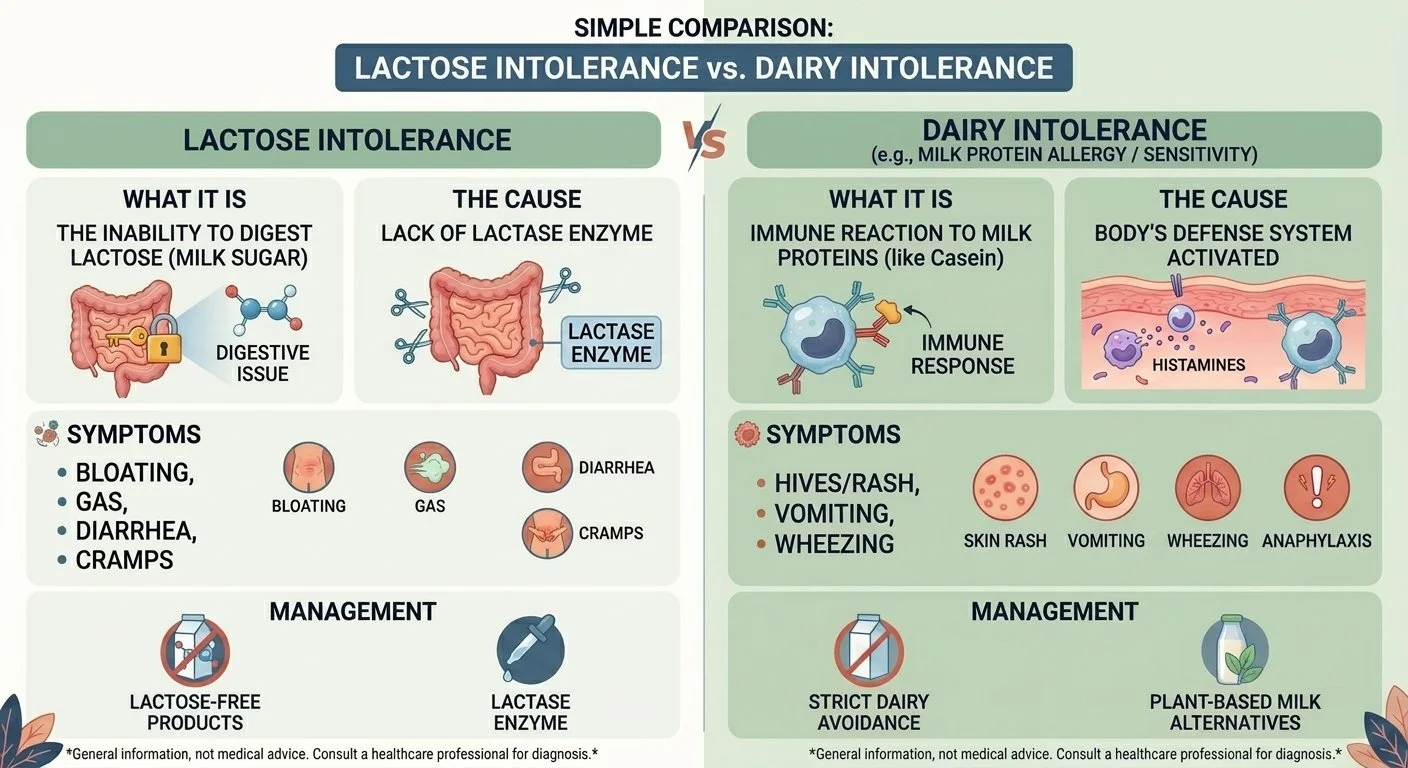
Lactose vs Dairy Protein intolerance by Liz Beavis - Food Intolerance Dietitian
Dairy Fat intolerance
If your gut symptoms are worse after rich dairy such as cream or butter, it is likely you are not tolerating the dairy fat. This could be an issue with your digestion (stomach, pancreas or gall bladder) or your gut bacteria could even be playing a role!
One theory for why dairy can trigger acne is that dairy fat could be responsible.

Amines
If cheese triggers your migraines, eczema or more, chances are that your issue is Histamine, or one of the other Biogenic Amines that occur naturally in cheese. Cheeses that have been aged longer have a higher level of Amines , and a stronger flavour.
Reducing your intake of these foods (and other foods high in amines) will definitely help reduce your symptoms but you can also increase your tolerance with a few strategies.
Is it dangerous to follow a lactose or dairy free diet longterm?
Following a lactose or dairy free diet will likely not have a negative impact on your gut microbiome as other restrictive diets do (eg Low FODMAP Diet).
The biggest concern is that when you follow a lactose or dairy free diet you may not be consuming enough Calcium. With a few simple tweaks, it is possible to consume enough Calcium on a dairy free diet.
Reasons you should see a food intolerance dietitian
You suspect Lactose or Dairy intolerance is playing a role in your symptoms and want support to understand your food triggers
You need help to work out suitable alternatives to dairy foods that still taste good
You are following a lactose or dairy free diet and need help to increase your Calcium intake
You want to improve your tolerance to lactose or dairy so you can broaden your diet without symptoms
You are confused about what is causing your symptoms and don’t know where to start – you just want to feel better!
If any of these sounds like you, I recommend working with a food intolerance dietitian so you can feel better, improve your health and have confidence knowing you can enjoy a range of foods without symptoms.
If you’re not sure whether that is the best next step for you, I recommend you book a free 15 minute Discovery Session to learn more about how I can help you.
Frequently Asked Questions
How do I know if I'm lactose intolerant or dairy intolerant?
Lactose intolerance means you have trouble digesting the milk sugar Lactose, while dairy intolerance usually involves reacting to milk proteins. Symptoms overlap, but timing and trigger foods differ: eg hard cheeses may be tolerated with lactose intolerance. A structured review with a dietitian can identify which applies to you.
Why can I eat cheese but not milk?
Hard, aged cheeses contain very little lactose, so many people with lactose intolerance tolerate them while reacting to milk. If cheese is the problem but milk is fine, a dairy protein or amine sensitivity may be worth exploring with a dietitian.
Can lactose intolerance develop later in life?
Yes. Lactase, the enzyme that digests lactose, naturally declines with age in many adults, and gut conditions or illness can also reduce it, sometimes temporarily. If dairy has recently started causing symptoms, a structured review can identify what changed.
Do lactase tablets help?
Lactase tablets can help some people digest lactose when taken with dairy, and can be useful for occasional meals out. They don't address other dairy reactions, such as protein sensitivities, which is one reason it helps to identify your specific trigger first.
Can you be lactose sensitive but not intolerant?
Sensitivity is a matter of degree: many people tolerate small amounts of lactose but react to larger serves. Finding your personal threshold, rather than cutting dairy completely, is exactly what a dietitian-guided reintroduction works out.
